Two single-wides can sit a few miles apart in Phoenix, and the older one won’t always be the cheaper of the pair. Where a home sits, what the lot rent looks like and whether the manager will approve a new owner can matter as much as the year on the data plate. If you own an older mobile home in Arizona and someone told you age alone decides your number, that’s only part of the story. Selling one here isn’t like selling a stucco three-bedroom in Gilbert. Titles run through a different office, buyers come from a different crowd, and the park gets a say.
Why Are You Selling Your Older Mobile Home?
Before we talk about price, tell me what’s driving this. Your reason shapes everything that follows. I’ve watched sellers lose a whole season chasing a plan that never fit their needs.
Some folks are handling a park that raised lot rent again. Others inherited a home in Apache Junction from a parent and live out of state. A few are staring at an eviction notice, a divorce or a medical bill that won’t wait. Each of those calls for a different path.
For plenty of sellers, speed is the whole constraint. Maybe your landlord gave you a deadline, or the property taxes on that older mobile home are piling up at the county. The calendar is running this decision whether you like it or not.
Owners in Arizona parks face something people on fee-simple land never think about. Lot rent keeps running while your home sits unsold. A few slow months in a Mesa park can eat a real chunk of your sale proceeds.
Write down your actual deadline. Not your ideal timeline, your real one. Everything else in this article gets easier once that date exists on paper.
How Much Is Your Older Mobile Home Really Worth?
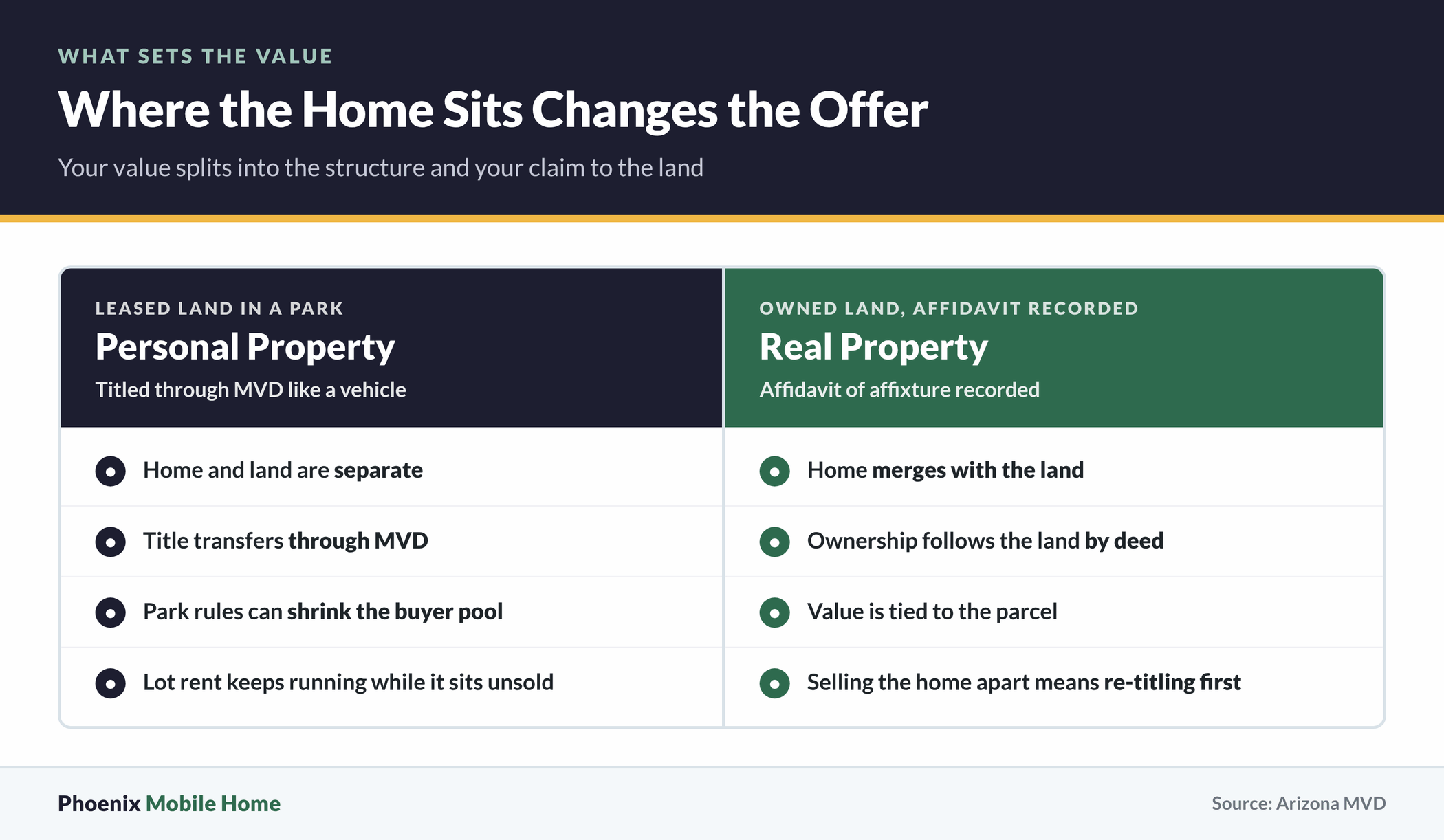
Your home’s value in Arizona splits into two separate things: the structure, and whatever claim you have to the dirt underneath it.
A home sitting on leased land in a Tucson park is personal property, titled through MVD like a vehicle. A mobile home on five acres you own near Camp Verde might be real estate if an affidavit of affixture was recorded. Those two setups draw very different offers.
Statewide numbers give you a baseline. In August 2026, Arizona homes sold for a median of $428,217, down 0.88 percent from a year earlier, according to Redfin. The typical home spent 66 days on the market. Those figures track the whole market rather than units in parks, so they won’t price yours. They do tell you buyers aren’t in a frenzy right now, and that waiting costs you something.
Asking prices on older units swing widely from place to place. Condition, park approval and roof age all pull the real number around. So does the lot rent a buyer will owe every month after closing.
What drags value down here? Soft subfloors near the tub are common, and so is roof coating cracked by decades of Sonoran sun or a swamp cooler that quit. Park rules matter too. When a community won’t approve someone who plans to keep the home in place, your buyer pool shrinks to people with land and a mover.
Have you had anyone check your home’s title status, or are you guessing? That one answer can move your number more than any repair.
Should You Repair an Older Mobile Home Before Selling It?
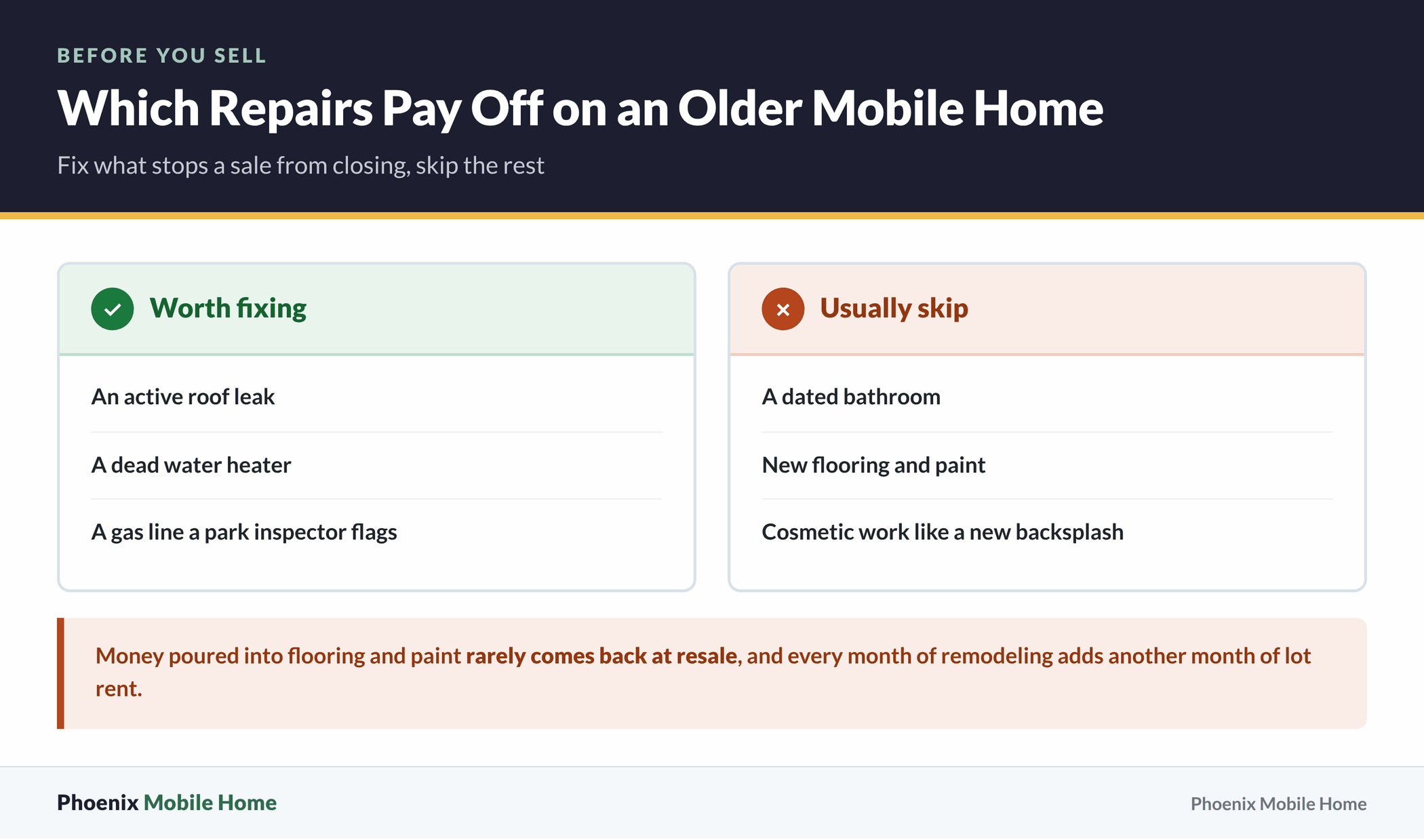
I’ve seen sellers in Sun City West pour savings into new flooring and paint. Then the home sits anyway, because the manager turns down the buyer they found. That money rarely comes back at resale.
On an older home in an Arizona park, cosmetic work is usually a losing bet, and plenty of agents would argue with me on that. What these homes fetch is capped by age, park and location, not by your backsplash.
Repairs that pay for themselves are narrow. Fix what stops a sale from closing, like an active roof leak, a dead water heater or a gas line a park inspector flags. Those can kill a sale. A dated bathroom won’t.
Arizona’s climate adds one wrinkle worth money. Roof coating on a Valley home does real work. Anyone who’s lived here knows what a chalky, cracked roof means for a first summer electric bill. Fresh elastomeric coating reads as upkeep rather than a remodel, and it photographs well.
If your home needs more work than you can fund, selling as-is isn’t giving up. Phoenix Mobile Home prices homes as they stand. Nobody’s asking you to front repair money you’d never get back at closing. Every month spent on a remodel is another month of lot rent, too.
Clean instead of remodeling. An empty, swept unit with the carport cleared shows far better than one packed with a lifetime of boxes, and it costs you a weekend and a dumpster.
Who Buys Older Mobile Homes in Arizona?
An heir in Yuma called me about her father’s 1979 double-wide. She’d listed it twice without a serious offer because retail buyers who liked it couldn’t get financing on a home that old.
Financing is the biggest reason older units sell slowly. FHA won’t insure a loan on a home built before the federal HUD code took effect in mid-1976. Freddie Mac doesn’t buy loans on them either. Retail buyers who fall for an older mobile home often find they can’t get a loan on it. That leaves you with buyers paying cash.
Cash buyers come in a few types. Retirees and snowbirds shop the 55-plus communities in Mesa, Apache Junction and Yuma. Local investors rehab and resell. Park owners buy units for their own lots. Rural landowners want a cheap structure for a parcel, and some buyers do nothing but mobile homes.
Each group values your home for a different reason. Retirees are really buying the lifestyle, while investors price the rehab and the resale.
You might worry that a park will make your buyer haul the home away. Arizona law protects a manufactured home built after June 15, 1976. If it sells to someone the park accepts as a tenant, the landlord can’t require removal solely because of the home’s age. Homes manufactured on or before that date don’t get this protection. The Arizona Department of Housing’s summary of the Mobile Home Parks Residential Landlord and Tenant Act walks through the rules.
Cash buyers treat sellers very differently, so get more than one number before you sign anything.
How Do You Sell an Older Mobile Home in Arizona?
You list it, and a buyer loves it right away. Signing at a title company a month later seems like the next step. Then you learn the title doesn’t move that way at all. In Arizona, MVD issues the titles on mobile homes. An unaffixed home changes hands through a state title transfer rather than a recorded deed.
So the real sequence looks different. First, confirm whether your older mobile home carries an MVD title or is already part of the real estate. An affidavit of affixture is the document that converts a manufactured home from personal property to real property. Once it’s recorded, the home’s ownership follows the land and changes whenever a deed does.
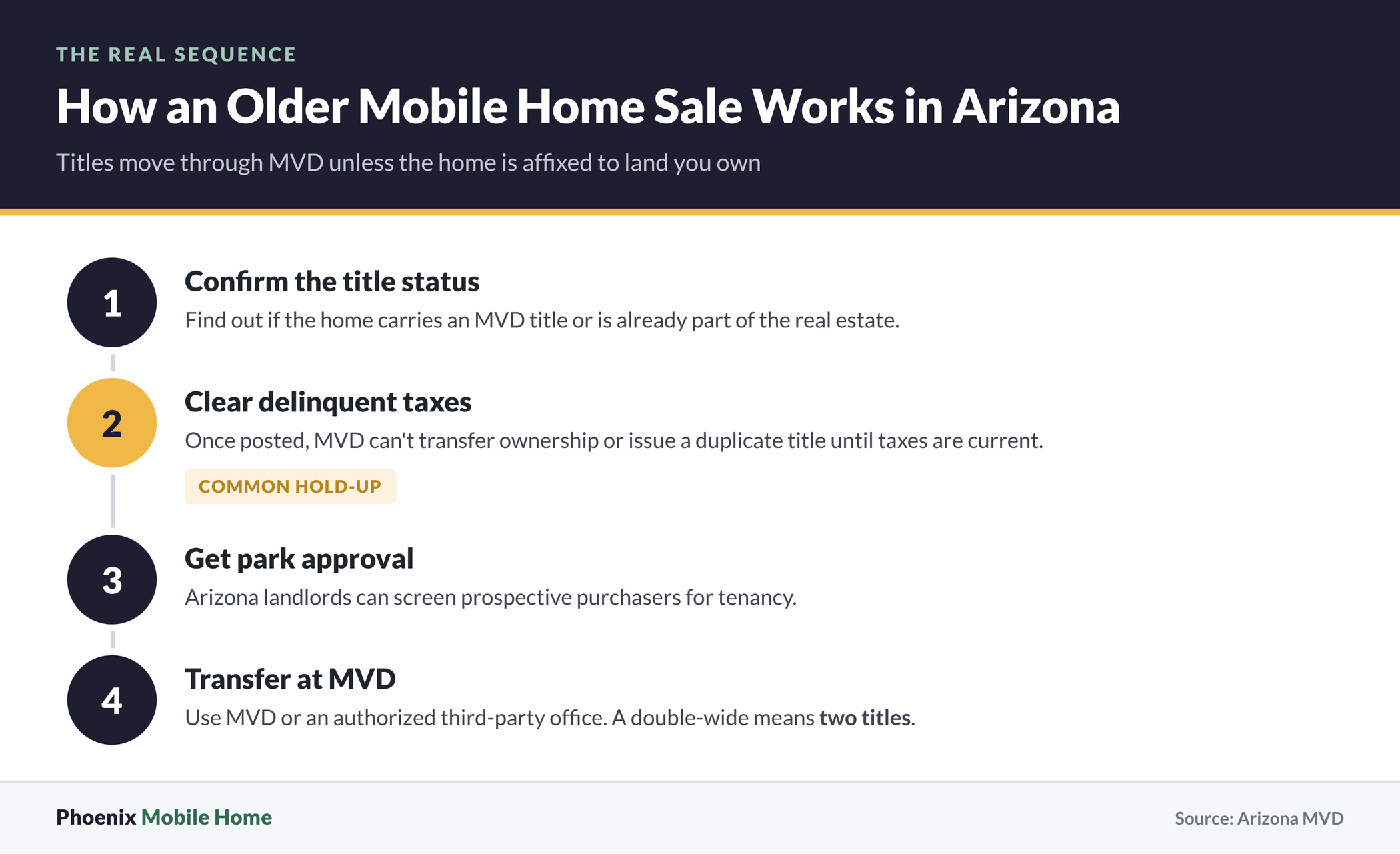
Second, clear any back taxes. When taxes on a mobile home go unpaid, they’re posted to its MVD record. The title can’t be transferred or replaced with a duplicate until they’re paid current.
Third, get the park’s approval if the buyer plans to stay. Landlords can reserve the right to approve a new tenant, though that approval can’t be unreasonably withheld. Parks also can’t stop you from selling at a price you choose or from posting a for-sale sign.
Fourth, transfer at MVD or an authorized third-party office. Arizona MVD’s mobile home page lists what to bring.
A multi-section unit carries a separate title for each section, so a double-wide means two titles and two sets of signatures.
What Paperwork Do You Need to Sell a Mobile Home in Arizona?
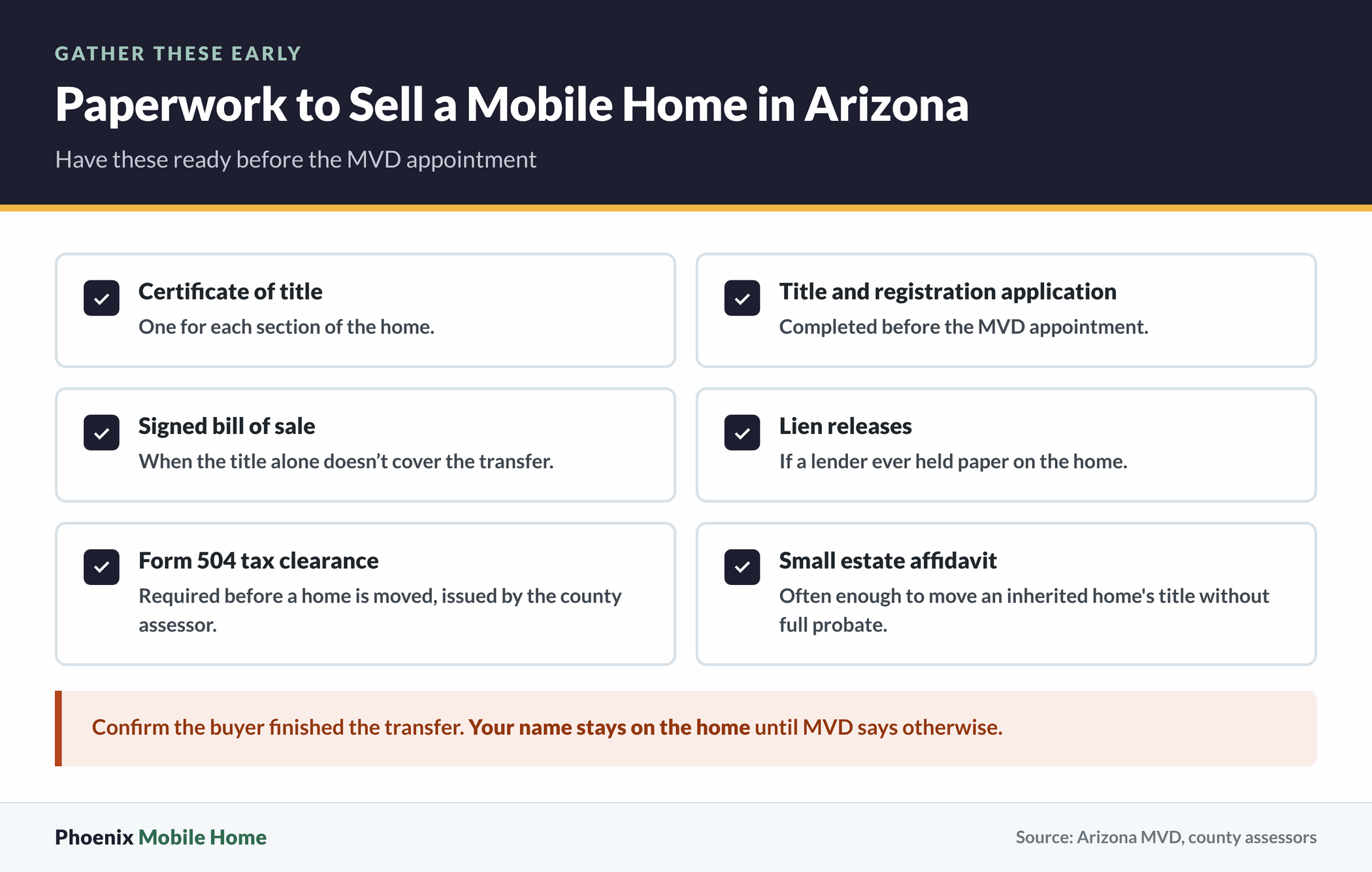
Form 504 is the one that surprises people. Arizona requires this tax clearance permit before a mobile home is moved. The assessor in the county where the home sits issues it. Maricopa County’s assessor posts its request form online. No county will issue the permit while taxes are delinquent.
For the sale itself, bring the current certificate of title for each section and a completed title and registration application. Add a signed bill of sale if the title alone doesn’t cover the transfer, plus lien releases if a lender ever held paper on the home.
A missing title isn’t fatal, since MVD issues a duplicate title once the record is clear.
When the owner has died, Arizona’s small estate affidavit can often move the title without a full probate. It covers personal property worth $200,000 or less, and the heir has to wait at least 30 days after the death to use it. The superior court in your county can point you to the forms.
To unaffix the home and sell it separately, you apply to MVD for a new certificate of title and submit a copy of the recorded affidavit of affixture. You also have the home inspected to verify the VIN and provide a written statement that it’s no longer affixed.
Sellers make one mistake more than any other in Arizona mobile home sales. They hand over keys and a signed title without confirming the buyer finished the transfer. Follow up. Your name stays attached to that older mobile home until MVD says otherwise, and unpaid taxes or park balances can circle back.
What’s the Fastest Way to Remove an Older Mobile Home From Your Property?
Arizona gives you three real options. You can sell it in place to someone who’ll move it, hire a licensed installer to haul it, or tear it down and pay for disposal.
Selling in place is usually cheapest because the buyer pays for transport. A working older home on a rural parcel near Kingman or Benson appeals to anyone who needs housing on their own land fast.
Hiring an installer means a stack of permits. Arizona’s Department of Housing or your local building office issues the installation permit for the new site. ADOT handles permits for moving the home on state highways, and the county issues the 504 clearance described above.
There’s also a state relocation fund, though it won’t cover a voluntary sale. It pays tenants who must move because a park changes use or gets redeveloped. Certain rent increases and a couple of other cases have their own rules. Under the change-in-use rule, the tenant has to submit the relocation contract to the director within sixty days after the move. Call the Department of Housing before you count on it.
Scrapping it brings disposal fees, and the county will still want the tax account closed properly.
A Chandler landlord splitting assets in a divorce owned an older rental unit in a 55-plus park. He hadn’t been inside since the last tenant moved out, and he wanted the sale handled without phone calls. We did it his way, and he signed at his attorney’s office on a Thursday.
When the buyer handles the MVD paperwork and the cleanout, most of the stress goes away. Phoenix Mobile Home built its service around that for sellers who want the problem to end rather than be managed.
Frequently Asked Questions About Selling an Older Mobile Home in Arizona
Can I Sell My Mobile Home and Keep the Land It Sits On?
Yes, and plenty of Arizona owners do. If the home still has an MVD title and was never affixed, you transfer the title and the buyer moves it off, leaving your parcel free. Once an affidavit of affixture is recorded, the home merges with your real estate, so you’d first retitle it through the unaffixing process described earlier.
Do I Have to Pay Off Back Taxes Before Selling an Older Mobile Home in Arizona?
Yes. Your county posts the unpaid balance where MVD can see it, and the transfer stops until it’s paid. Some direct buyers in Arizona will handle the payoff at closing and take it out of your proceeds. That spares you from coming up with cash first. Ask any buyer up front whether they’ll do that.
How Long Does Selling an Older Mobile Home in Arizona Usually Take?
Listing through a broker tends to run longer than the statewide market pace, mostly because the cash-only buyer pool is smaller and park approval adds its own wait. Direct sales usually move faster, and the MVD appointment is often the main scheduling piece. Missing titles or an estate transfer will add time to either path.
Can I Sell an Older Mobile Home in Arizona If I Inherited It?
You can, though you’ll need authority to sign. Many of these go through the small estate affidavit route covered above, without a full probate. Bring the death certificate and the title paperwork to MVD or to an attorney, and confirm which path fits before you list.
Talk to Us About Selling an Older Mobile Home
Not every seller needs the same path, and I’m glad to walk through yours with you. Tell me what you own, where it sits in Arizona and what your deadline looks like. I’ll give you a straight read on your options, including the ones that don’t involve selling to me, with no pressure and no obligation.
Weighing repairs or a direct sale? Contact Phoenix Mobile Home and we’ll look at your situation with you. You can also fill out the short form below to get a cash offer on your mobile home.